

Breaking Negative Feedback Loops In Tourism: A View from the Edge
How do we create the conditions for a fundamentally different conversation that moves beyond rationalising infrastructure solutions to reimagining a different relationship with the world?

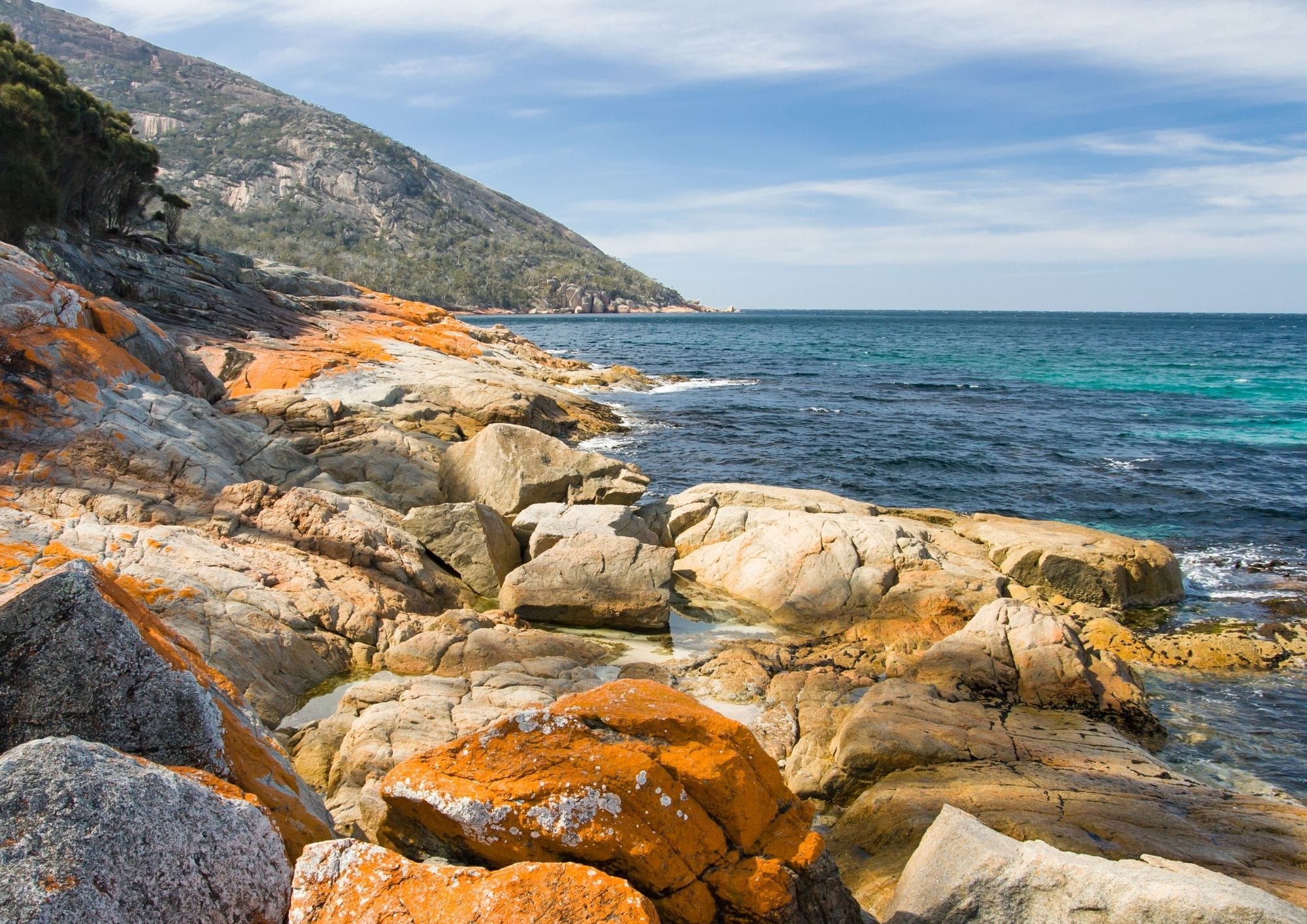
I’ve been thinking a lot about feedback loops lately because they have been coming up in all the places I am working. In particular, it’s the negative feedback loops that keep us stuck in old patterns that keep resurfacing. However, when we give ourselves the time to pause, stop trying to solve problems, and immerse ourselves in place, these recurrent negative feedback loops become clear. How we address them will determine whether we maintain the same old cycle, or whether we can emerge into a new and more positive cycle.
This week I have been invited to the Freycinet Action Network’s fundraiser, which has been organised to raise funds to fight a carpark proposed by the Parks and Wildlife Service on an ecologically sensitive site on the Freycinet Peninsula. This issue is one that I’ve seen play out again and again in many touristed places, particularly in different coastal contexts. Freycinet is a microcosm of a global pattern, i.e., a much loved place is under immense pressure, communities are fighting for a different approach, and institutional responses remain largely locked in the infrastructure-and-growth loop. This could be the scenario taking place on any environmentally significant site anywhere in the world. The feedback loop is the same.
What is a Feedback Loop?
Feedback loops are those cycles that keep us in a holding pattern. Without limiting the significant work of others (the all time classic text is Donella Meadows' Thinking in Systems), feedback loops can be both positive and negative.
A negative feedback loop perpetuates harm. For example, when a sensitive ecological site receives too much visitation, the response is often to harden and widen paths to accommodate increased foot and vehicular traffic. The solution increases accessibility, but contributes to further decline in the ecological values of the site. The solution reinforces the problem rather than resolving it.
A positive feedback loop, on the other hand, amplifies positive change and moves us towards a less conflictual and potentially more positive outcome. For example, limiting access to allow rest and regeneration that will improve ecological health, enhancing the experience for fewer visitors and earning community support. It’s a cycle that strengthens rather than depletes. But it’s also an approach that brings awareness to, and pushes back on, the hidden and homogenising assumption in policy that tourism growth everywhere, all the time, is necessary.
The Solution is the Problem that Keeps Us Stuck
Preparing for this week, I started thinking about a challenging place I was doing community consultation in a few years ago. A coastal community subject to intense tourism pressures. Before I had even started, the policymakers already had their solutions in hand. Hard solutions, like traffic calming and more car parks. Increased public transport following a hub and spoke model. While I drew attention to the fact that honest and genuine community engagement does not start with the solution, it was an observation they weren’t able to receive. The solution was the problem.
A different but similar cycle is playing out in Freycinet. The Freycinet Visitor Gateway Project proposes to relocate key visitor infrastructure outside Freycinet National Park to a site on Crown land northwest of Coles Bay. The $19.7 million development would include parking for 350 vehicles (including caravans and RVs), a visitor information facility, amenities, and a peak-period shuttle service to reduce vehicle congestion within the park and adjacent residential areas. The staged development aims to create a sense of arrival for visitors whilst minimising environmental and visual impacts through careful siting on lower portions of the site, setback from Coles Bay Road, and vegetation screening. The preliminary site concept plan incorporates specialist surveys addressing threatened flora and fauna, cultural heritage, and bushfire safety. It represents a technical infrastructure solution which will likely keep the place stuck in a negative spiral. Again, the solution is the problem.
The Infrastructure Loop is the Problem
The real problem I see is a relational one. It’s our relationships to place, to people, to nature, and to the systems that shape us. The idea that we can fix the problem with more development is, quite frankly, a twentieth century solution. In a nutshell, here is what that negative feedback loop looks like:
More visitors arrive because growth and promotion is the underlying policy dynamic → Infrastructure struggles to cope → Community experiences negative impacts → Government invests in hard infrastructure → Capacity increases → Marketing continues (or intensifies) → Even more visitors arrive → Infrastructure struggles again
Naming it, acknowledging it, makes it so much easier to deal with.
Each “infrastructure solution” simply reinforces negative consequences and enables the next iteration of the problem. The problem is not being solved, we’re increasing the scale at which the dysfunction operates. We’re solving the wrong problem with taxpayers dollars, which in turn opens up a whole different set of feedback loops about the opportunity costs of funding infrastructure when there is a retraction in funding for social, health, education and community services. (I will leave that issue there- but it’s a significant thread for the future).
In other words, the growth-infrastructure-tourism intensification loop employs a technical solution (a 20th century belief that infrastructure can solve anything), but the problem is fundamentally a relational one.
The Problem is Relational
The real problem we are dealing with - and this goes for both Freycinet and countless other touristed places - is that it is relational. It’s our relation to the issue, the place, the economy, the worldview, the community, to nature, and to the system that keeps us stuck in these same old negative feedback loops.
If place (i.e. the full sum of its physical, social, cultural, ecological and economic connections across time/space) is framed as a resource from which economic value can be extracted, then of course the solution is to build bigger, extract more. Short term gain is prioritised over long-term balance and wellbeing of the system. To be blunt, there is little difference between this extractive approach in tourism and in mining.
Communities tend to see the value of the places that they inhabit in a more holistic way, acknowledging a suite of ecological, social, cultural, well-being and economic values. Their relationship with place tends to be more aware of the interplay of changes over time, many of which they have little to no control over (e.g. climate change, economic restructuring, housing crisis, cost of living increases). No wonder they are resisting top down interventions that, as stewards of the place, they know will produce a negative self-reinforcing feedback loop. Social unrest in touristed places across the world illustrate this rise in local consciousness about what tourism is doing to their homes.
The Freycinet Moment: Can the Negative Loop be Broken?
So, I’ve been invited to the Freycinet Action Network fundraiser this week, and I’ve been reflecting on what’s happening there. Freycinet is a familiar pattern - a much loved place under immense pressure, with communities fighting for a different approach while institutional responses remain largely locked in the growth - infrastructure-tourism intensification loop.
The Freycinet situation is not a tourism problem. It’s a systems problem. It’s a relational problem, and it won’t be solved by technical fixes, no matter how well-intentioned. It reminds me of the old saying “You can’t solve a problem with the same thinking that got us here in the first place”.
The only way to break free from these loops is to challenge the systems that created them in the first place, and that means questioning our relationship to that system. Where does expertise actually lie? With expertise from top down consultants writing to a brief with outcomes and deliverables, or with communities who live with these places year-round? Who sets the priorities, and whose voices are excluded from those decisions? What values are baked into our processes, and are we treating places as living systems to be cared for, or resources to be exploited?
This means taking a deep hard look at the systems we take for granted. Is our community engagement tokenistic? Is it designed to produce the outcomes that are pre-set? Are we recognising the power structures that keep meaningful participation and local expertise at arm’s length? It means examining the economic models that measure success in growth, visitor numbers, and revenue rather than ecological health and community wellbeing.
When we start asking these questions, and when we identify the loops and trace how they function to produce the same outcomes (i.e. problems), we can begin to design interventions that actually shift the system. We move from reactive problem-solving to intentional system change. From negative feedback loops that degrade, to positive ones that regenerate and restore.
Thinking Differently
Breaking feedback loops requires thinking differently at a fundamental level. It means:
Starting with relationships, not infrastructure. How do we build trust between visitors, operators, communities, policymakers, politicians, and place? What governance structures enable genuine community agency?
Designing for regeneration, not just doing less harm. How can tourism actively contribute to the wellbeing of a place (I mean holistically) rather than merely minimising harm? What does strategic retreat from ‘growth on steroids everywhere’ look like in practice?
Challenging growth assumptions. What if the goal isn’t ‘managing to grow’ but determining the optimal scale of tourism for place, community and ecological wellbeing (even if that means saying “less” in this place)?
Honouring local wisdom. Communities know what’s happening in their places. What would it mean to genuinely share decision-making power, to validate community concerns, rather than just consulting?
These are uncomfortable questions. They challenge vested interests, economic models, existing locked-in organisations, and institutional habits. They challenge who has the knowledge, and who can build responsive actions. It begs the question, “How can we stop defaulting to technical solutions, like more carparks, wider roads, harder paths, more passengers, and bigger infrastructure, which keep us stuck in the same destructive loops?”
A Different Way Forward
I do acknowledge that sometimes we need a carpark. But, in the light of the metacrisis (i.e. ecological decline, climate crisis, economic restructuring, housing affordability and availability, cost of living, and so on) tourism infrastructure decisions must be made within a fundamentally different framing.
It’s time to pause and reflect on our relationship to the system, on community knowledge and agency, and how we value the health and wellbeing of our places. This opens up the potential to use infrastructure strategically to support those priorities rather than simply to accommodate more growth at the expense of systems health.
This is work we’ve been exploring through the Islander Way Regenerative Living Lab on Flinders Island. Over the last five years we have been facilitating the conditions for community-led regeneration rather than imposing external solutions. It’s slow, relationship-intensive work that doesn’t fit neatly into funding cycles or political timelines. In my experience, it’s the only approach I’ve seen working in tourism, community development, and place-based systems design that actually changes the feedback loops rather than reinforcing them.
So, as I head to the Freycinet event this week, I’m holding this question in my heart to frame my engagement: How do we create the conditions for a fundamentally different conversation that moves beyond rationalising infrastructure solutions to reimagine tourism in a different relationship with the world?
Until we change the conversation, we’ll just keep building bigger carparks and wondering why nothing improves. The feedback loop will keep us stuck until we’re brave enough to break it.
About me: I write from Flinders Island, Tasmania, and work with communities in the process of healing from extractive economic models and seeking to unleash place-based and community-led possibilities in a rapidly changing world. After two decades in academia as a professor (250+ publications, policy work with the OECD and European Commission and all levels of Australian government), I deliberately left to break the negative feedback loops inside universities that kept me stuck, to heal from a toxic academic system, and be the change I wish to see in the world. Stepping outside the system, I now am free to think, feel, listen, and step into alignment with my values. The first several posts in Place Ecologies share my insights and reflections on becoming whole again, so please read if you are also in a similar transition from the systems that keep you stuck!)
The Tourism CoLab is a global learning community (this is a care project, not a business in the traditional sense), which is now evolving into Place Ecologies. This transition reflects a shift from tourism-specific work toward broader place-based transformation. My work focuses on how policy, ecological relationships, financial systems, and community sovereignty intersect.
Go ahead, make my day! Share Place Ecologies with those who you think might generate deeper thinking and conversation. If you have the means, please subscribe!
Thank you so much for this. Thoughtful analysis. Easily able to refer to many examples all across Canada of how the Infrastructure Loop drives DMO and provincial government department planning and marketing. Completely resonating with the relationship driven approach. Thanks for the suggestions for thinking differently. I will be quoting/referencing excerpts from this post as part of a presentation/workshop I am facilitating next week for the Eastern Shore region of Nova Scotia, as they come together for two days to have conversations about tourism for their region, arguably the wildest region of Nova Scotia's shoreline on the Atlantic side.